

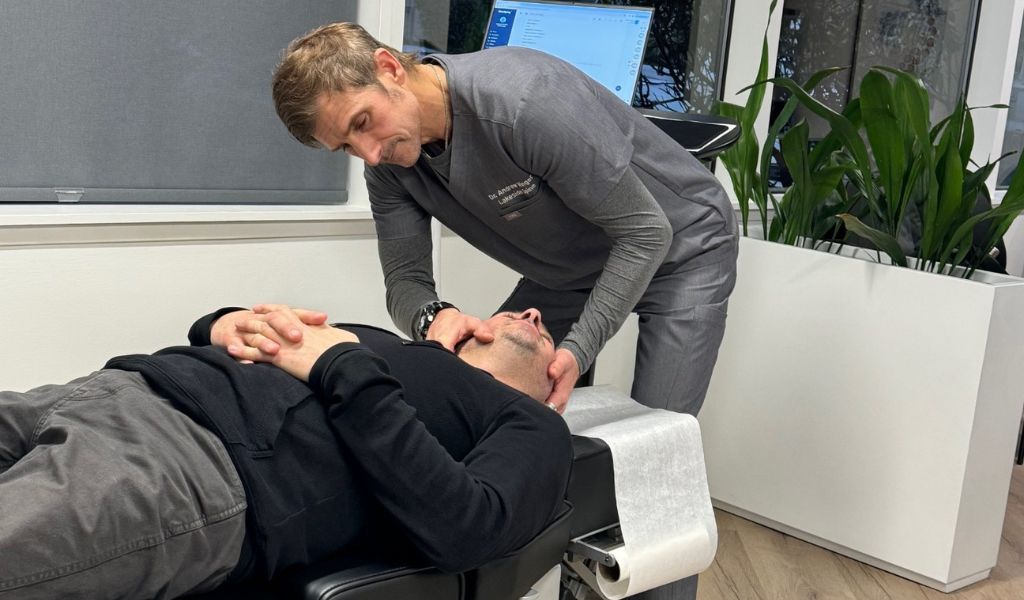
Most people only think about their spine when something hurts. By the time pain shows up, though, the problem usually isn’t new, it’s been quietly building for months or years through poor posture, repetitive movement, old injuries, and daily wear and tear. That’s exactly why long-term spinal health matters. It’s not just about feeling better today; it’s about protecting how you move, function, and feel decades from now.
Spine pain is now the leading cause of years lived with disability worldwide, affecting more than 11% of the global population at any given time, according to a peer-reviewed review published in Frontiers in Pain Research (Gevers-Montoro et al., 2021). In response, major guidance bodies have shifted away from medication-first approaches for low back pain: the American College of Physicians lists spinal manipulation as one of several first-line nonpharmacologic options for low back pain, and the UK’s NICE guidelines recommend manual therapy only as part of a treatment package that also includes exercise, for low back pain and sciatica.
At Lakeside Spine and Wellness in Renton, WA, we see this play out every day. Patients arrive after years of neck pain, back pain, headaches, or sciatica, looking for something more lasting than a temporary fix. The good news? When delivered through a structured, corrective plan, chiropractic adjustments can do far more than ease pain, they can help reshape the long-term health of your spine.
Here’s exactly how.
What Does “Long-Term Spinal Health” Actually Mean?
Long-term spinal health isn’t a single outcome, it’s a set of conditions that, together, allow your spine to age well and your body to function at its best.
In practical terms, that means:
- Proper alignment of the vertebrae from the neck through the lower back
- Healthy joint motion at every spinal segment (not too stiff, not too loose)
- Hydrated, well-nourished discs between the vertebrae
- A nervous system that can send and receive signals without interference
- Strong, balanced muscles that support and protect the spine
- Postural patterns that don’t overload one area of the spine over the other
When all of these are working together, you move easily, recover quickly from strain, and stay active as you age. When one or more break down, the others tend to follow and that’s when pain, stiffness, and degeneration begin to creep in.
Chiropractic adjustments influence almost every one of these factors, which is why they sit at the center of any serious long-term spinal care plan.
Why the Spine and Nervous System Are Inseparable
Your spine isn’t just a stack of bones, it’s the protective housing for your central nervous system. Every signal your brain sends to your organs, muscles, and tissues passes through the spinal cord and the nerves that branch out between each vertebra.
That’s why we often tell patients: spine problems eventually become nervous system problems. Misalignments, restricted joint motion, and postural distortion can irritate nerves, reduce neurological signaling, and create a cascade of issues that go well beyond a stiff back. By keeping the spine healthy, you protect the system that controls how your body functions and adapts. This is the foundation of the chiropractic adjustments and corrective care we provide at Lakeside Spine and Wellness.
What a Chiropractic Adjustment Actually Does
A chiropractic adjustment also called spinal manipulation, is a precise, controlled force applied to a specific spinal joint. The motion is typically a high-velocity, low-amplitude thrust, which sounds dramatic but is gentle, quick, and rarely uncomfortable.
During an adjustment, several things happen at once:
- The joint is brought through its proper range of motion
- Restricted joint mechanics are restored
- Pressure on surrounding nerves is reduced
- Reflex muscle tension begins to release
- Gas dissolved in the joint fluid is released (this is the “pop” you may hear, it’s harmless)
A single adjustment can produce immediate relief, but the real value comes from a planned series of adjustments that progressively retrain the spine into healthier alignment and movement patterns over time.
6 Ways Chiropractic Adjustments Support Long-Term Spinal Health
1. They Restore and Maintain Proper Spinal Alignment
When vertebrae shift out of their ideal position, even slightly, the load on the spine becomes uneven. Some discs and joints get overloaded while others underwork, which over years leads to wear, inflammation, and degeneration. Adjustments bring those segments back toward their proper position so the spine can share load the way it was designed to.
At our Renton clinic, we go further than basic positional adjustments by using Chiropractic Biophysics (CBP), a research-supported corrective system that uses mirror-image adjustments, exercises, and spinal molding to measurably improve alignment, not just temporarily reposition it.
2. They Reduce Nerve Interference and Improve Neurological Function
When joints are misaligned or restricted, the surrounding nerves can become irritated or compressed. This contributes to common issues like sciatica, pinched nerves, tingling, and weakness in the arms or legs. Adjustments take pressure off these nerves and help restore clearer neurological signaling between the brain and body, which is essential for long-term spinal and overall health.
3. They Slow and Sometimes Reverse Spinal Degeneration
Spinal joints, like any joints, need motion to stay healthy. Without it, cartilage thins, discs lose hydration, and the body begins laying down extra bone, what’s commonly called degenerative arthritis of the spine. Regular adjustments keep joints moving through their full range, supplying them with the nutrients and circulation they need. While we can’t undo every change, we can absolutely slow degeneration and, in many cases, improve the function of joints already affected by conditions like degenerative disc disease.
4. They Relieve Pain Without Medication
This is the benefit most patients notice first — and the research backs it up. The same Frontiers in Pain Research review found that spinal manipulative therapy is at least as effective as other recommended therapies for chronic primary back and neck pain, including medication and standard physical therapy, with a far better safety profile than opioids or surgery. For people dealing with chronic neck pain, lower back pain, or headaches and migraines, this matters: pain relief without the side effects, dependency risks, or downtime of more invasive approaches.
5. They Improve Posture and Reduce Repetitive Strain
The single biggest threat to long-term spinal health in modern life isn’t injury — it’s posture. Hours hunched over phones, laptops, and steering wheels create forward head posture, rounded shoulders, and flattened lumbar curves that put constant abnormal load on the spine. Adjustments combined with corrective programs like our PostureZone™ coaching and CentriForce™ spinal strengthening retrain your body into better positions, so the strain you’d otherwise accumulate every day starts coming back out.
6. They Catch Small Problems Before They Become Big Ones
Regular adjustments don’t just treat what’s already painful they create a steady opportunity for your chiropractor to identify subtle changes in alignment, mobility, or muscle balance before they turn into something more serious. This is the same logic that drives routine dental checkups: small, predictable adjustments are far less disruptive than waiting for a problem to demand emergency care.
The Three Phases of Long-Term Chiropractic Care
Most patients don’t realize that long-term spinal care has a structure. At Lakeside Spine and Wellness, we typically guide patients through three distinct phases:
Phase 1: Relief Care. The first goal is to reduce pain and inflammation, and restore basic function. Visits are more frequent during this phase because your body needs consistent input to break long-standing patterns. Most patients feel meaningful improvement within a few weeks.
Phase 2: Corrective Care. Once pain settles, the focus shifts from symptom relief to actually correcting the underlying problem, alignment, posture, joint motion, and muscle balance. This is where Chiropractic Biophysics, spinal decompression, and rehab and exercise therapy come in. Visit frequency drops, and the improvements made here are what make long-term results possible.
Phase 3: Wellness Care. Once your spine has been corrected, the goal becomes maintaining and protecting it. Wellness visits are spaced further apart often every few weeks or once a month and exist to catch small issues early, reinforce alignment, and keep you out of the symptom-and-flare-up cycle most chronic-pain patients are stuck in.
This is the meaningful difference between chasing pain and building long-term spinal health. Most over-the-counter approaches, pain medication, occasional massage, generic stretching, never make it past phase one.
What the Research Says
It’s a fair question: how strong is the evidence? In short, it has grown substantially over the past decade.
Major clinical practice guidelines now list spinal manipulation among the first-line nonpharmacologic options for low back pain, including the American College of Physicians’ guidelines, while the UK’s NICE guidelines recommend manual therapy only as part of a broader treatment package that includes exercise. These bodies don’t make recommendations lightly; they reflect a shift in how mainstream medicine views manual and movement-based care.
The peer-reviewed evidence supports several specific conclusions:
- Spinal manipulation is as effective as other recommended therapies (including standard medical care and physical therapy) for both acute and chronic non-specific back and neck pain.
- The combination of spinal manipulation plus exercise is one of the strongest non-invasive approaches for spine pain.
- Maintained, ongoing spinal care over months, not just short courses, is associated with better long-term pain and disability outcomes than no continuing care.
- Chiropractic spinal manipulation is cost-effective and rarely inappropriate when delivered by a trained, licensed chiropractor.
These are the foundations on which a corrective, long-term approach is built.
Conditions a Long-Term Chiropractic Plan Can Help
While chiropractic isn’t a cure-all, a well-designed long-term plan can meaningfully support people dealing with:
- Chronic lower back pain and neck pain
- Herniated discs and degenerative disc disease
- Sciatica and nerve-related radiating pain
- Scoliosis and postural distortion
- Recurrent headaches and migraines
- Whiplash and post-accident recovery
- Work injuries and sports injuries
- General joint stiffness, arthritis, and age-related mobility loss
The right plan looks different for every patient. That’s why our care always starts with a thorough exam, postural and neurological testing, and a written report of findings, not a one-size-fits-all template.
Lifestyle Habits That Amplify the Benefits of Adjustments
Adjustments work best when paired with the daily habits that protect spinal health between visits. The best long-term outcomes we see come from patients who combine their care plan with:
- Daily movement. Sitting is one of the worst loads on the spine. Even short, frequent walks help discs stay hydrated and joints move.
- Targeted strengthening. Core and postural muscles need to be strong enough to hold the corrections made in the adjusting room. Our rehab and exercise therapy program is built around this.
- Ergonomic awareness. Adjusting your desk height, screen position, and chair setup to neutral spine alignment.
- Adequate sleep on a supportive mattress and pillow. Sleep is when your discs rehydrate; quality matters.
- Hydration. Your spinal discs are mostly water, chronic dehydration accelerates disc degeneration.
- Anti-inflammatory nutrition. Diets high in processed foods and sugar increase systemic inflammation, which affects joints and recovery.
We support these habits directly through nutrition services and ongoing patient education at the clinic.
Signs You’d Benefit From a Long-Term Spinal Care Plan
It’s worth asking yourself whether any of the following describe your situation:
- You’ve had recurring neck or back pain for more than three months
- You’ve been told you have a herniated or bulging disc, but want to avoid surgery
- You experience frequent headaches that medications only partially help
- You sit at a desk for most of the workday and notice growing stiffness or fatigue
- Your posture has visibly changed over the past few years
- You’ve had an old injury (car accident, sports, work) that never fully resolved
- You want to stay active, mobile, and independent as you age
If any of these apply, a structured long-term plan may give you results that short courses of treatment haven’t.
What a Long-Term Plan at Lakeside Spine and Wellness Looks Like
Every plan we build starts with a complimentary consultation and a thorough exam. From there, Dr. Andrew M. Winger, D.C. who specializes in bio-structural corrective care and Chiropractic Biophysics, develops a personalized plan that may include:
- Corrective chiropractic adjustments
- Chiropractic Biophysics mirror-image protocols
- Spinal decompression for disc-related conditions
- Rehab and exercise therapy to support and lock in corrections
- Postural training through PostureZone™ and CentriForce™
- Nutrition and lifestyle guidance to reduce inflammation and support healing
You’re not signed up for endless visits. The plan has a clear arc, relief, correction, then long-term maintenance and you’ll always understand where you are in the process.
Frequently Asked Questions
Is it safe to get chiropractic adjustments long term?
For most people, yes. When performed by a licensed chiropractor, adjustments have a strong safety record, and many patients receive them regularly for years. As with any healthcare, your chiropractor will screen for conditions that require a different approach or referral.
How often should I get adjusted for long-term spinal health?
Frequency depends on what phase of care you’re in. During relief care, visits are more frequent. During corrective care, they typically taper. In wellness care, many patients do well with one visit every two to four weeks. We tailor frequency to exam findings and goals, not a rigid schedule.
Can chiropractic care prevent future back or neck problems?
It can significantly reduce the likelihood. Regular adjustments help maintain alignment, joint motion, and postural balance — three of the biggest predictors of future spine problems. Combined with strengthening and good daily habits, long-term care is one of the most proactive things you can do for your spine.
Is it ever too late to start chiropractic care? Rarely. Patients in their 60s, 70s, and beyond often see meaningful improvement in pain, mobility, and posture — even after years of symptoms. The structure of the plan may differ from someone in their 30s, but the principles are the same.
Will I become “dependent” on adjustments?
No. The goal isn’t dependency, it’s correction. As your spine becomes healthier, structure improves, and supporting muscles strengthen, you generally need adjustments less often, not more. Wellness visits exist to maintain results, not to create a need.
Do I need a referral to see a chiropractor?
In Washington state, no. You can schedule directly with us. Many insurance plans cover chiropractic care, and we’re happy to verify your benefits before your first visit.
Build a Healthier Spine — Starting Today
Your spine doesn’t have to be the part of your body that decides what you can and can’t do as you get older. With the right care plan, it can be the thing that keeps you moving, working, lifting, traveling, and enjoying life for decades.
If you’re in Renton, Newcastle, Kent, Tukwila, Mercer Island, Bellevue, or anywhere in the surrounding area and you’re ready to do more than chase symptoms, we’d love to meet you. At Lakeside Spine and Wellness, every plan starts with a complimentary consultation, no pressure, just clarity on what’s going on and what your options are.