

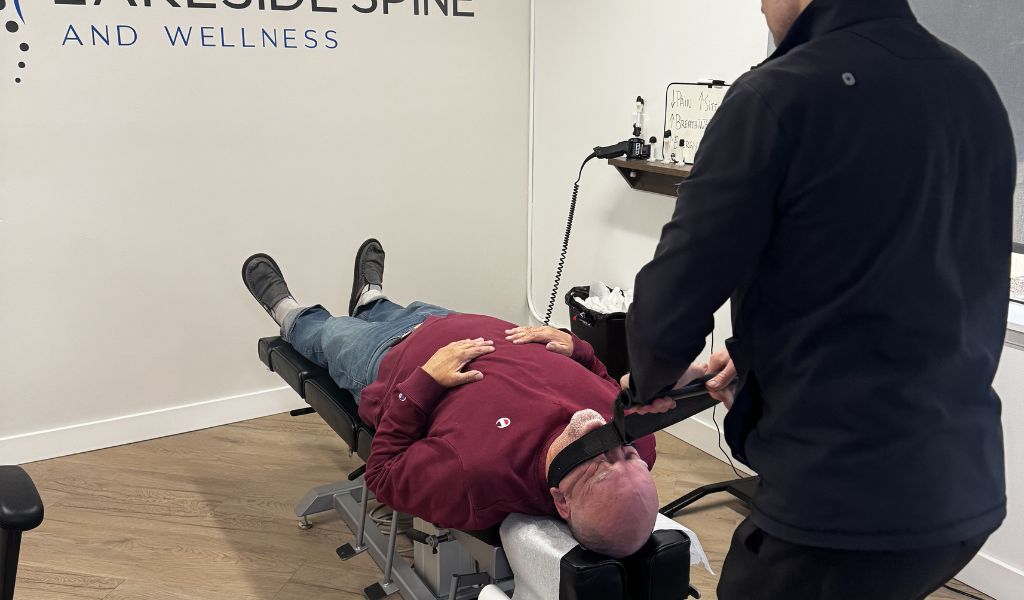
Patients researching spinal decompression online run into two terms that sound similar but describe different things: a motorized decompression table, which some clinics use, and manual traction, a hands-on technique that's been part of chiropractic and physical therapy for decades. At Lakeside Spine and Wellness, decompression is delivered with a specialized strap that applies controlled, gentle traction - not a mechanical table. Here's what each approach actually involves, and what to expect at Lakeside specifically.
What Manual Traction Actually Does
Manual traction is exactly what it sounds like: a clinician applies a controlled pulling force to the spine, usually the neck or lower back, by hand or with a supporting strap. It's simple, requires no motorized equipment, and can be adjusted moment to moment based on how a patient's tissue responds. Its limitation is also built into that same simplicity - a person can only apply so much sustained, precisely controlled force before fatigue sets in, and the body's own protective muscle guarding reflex tends to resist a strong pull, which can cap how much actual separation is achieved.
How a Motorized Decompression Table Differs
A motorized decompression table, where a clinic offers one, applies a computer-controlled cycle of gentle pulling and releasing rather than one sustained pull, and can deliver the same programmed pattern every session without depending on clinician fatigue or feel. Comparative research does not show powered decompression tables producing better outcomes than manual or strap-based traction, so the difference is in how the pull is delivered, not a proven advantage in results. That is not the method used at Lakeside Spine and Wellness - our approach is described below.
What a Decompression Session at Lakeside Actually Involves
A typical session runs 15 to 20 minutes, fully clothed, lying down, with a specialized strap securing the targeted region while a controlled tension-and-release pattern is applied. Most patients describe it as a mild stretching sensation, not painful. It's a passive treatment - you're not doing the work, which is part of why we pair it with the active rehab exercise therapy most patients also need, since decompression addresses the disc while the exercise work addresses the muscular support around it.
For general background on how spinal traction techniques work and what conditions they're typically used for, the National Library of Medicine's consumer resource is a good starting point (MedlinePlus, Spinal Traction). The National Center for Complementary and Integrative Health also maintains a general overview of chiropractic care and the evidence behind manual and mechanical spinal techniques (NCCIH, Chiropractic In Depth).
What the Research Actually Says
Neither manual/strap traction nor mechanical decompression is a guaranteed fix, and we don't present either one that way. What the evidence generally supports is that reducing sustained pressure on a compressed disc can relieve the mechanical irritation contributing to pain and nerve symptoms in appropriately selected patients - the qualifier "appropriately selected" is doing real work in that sentence, because decompression is not the right tool for every type of back or neck pain, including some presentations that mimic disc symptoms but originate elsewhere. That's exactly why the exam comes before the recommendation, not after.
How We Decide If Decompression Is Right for You
This decision is made from imaging and exam findings that tell us where the pressure actually is and how your tissue is responding to load, not from patient preference. If you've been told you might be a candidate for decompression, or you're dealing with disc symptoms that manual adjustments alone haven't resolved, book an appointment and we'll test first before recommending a plan.
For more on who tends to benefit most from decompression specifically, see who spinal decompression actually helps. If you're trying to figure out what kind of disc issue you're dealing with in the first place, herniated vs. bulging disc and sciatica vs. piriformis syndrome both cover related diagnostic questions.