Fall lands on a lot of patients' backs all at once - resumed school pickup lines, a commute that got longer again, and the first weekend of yard cleanup before the rain sets in. Most of that soreness settles in a few days on its own. Some of it does not, and a lot of patients wait weeks before asking which kind they actually have.
Ordinary soreness vs. pain worth checking
Muscle soreness from a weekend of raking or an unusually long day of standing in a pickup line tends to follow a predictable pattern: it shows up within a day, it's diffuse rather than sharp, and it eases noticeably within three to five days with normal movement. Pain that lingers past that window, stays sharp or localized, or changes how you move - favoring one side, avoiding certain positions - is a different category. That's the pain worth a testing-first look rather than more waiting.
What "back pain relief" actually means here
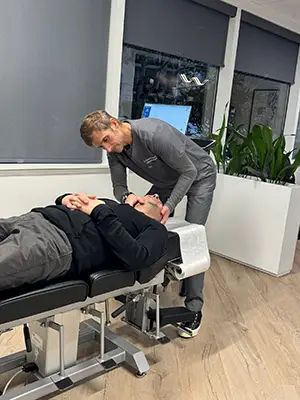
"Back pain relief" gets used as a catch-all online, but what it actually starts with is an evaluation, not a treatment plan handed out sight unseen. A testing-first visit looks at how your spine moves, where the restriction or irritation actually is, and what's driving it - a desk setup, a lifting pattern, or something that needs a closer look. That evaluation is what determines what happens next, not a generic protocol applied to every back.
This is also where a lot of patients get sidetracked reading condition pages online. Our own lower back pain page walks through what a testing-first evaluation actually covers, and it's worth reading before assuming a search result answers your specific case.
Why fall specifically tends to bring this up
Three things land close together this time of year: yard work before the wet season starts, a return to a regular commute after a looser summer schedule, and more time spent standing or bending during school pickup and after-school routines. None of those are unusual activities on their own, but stacked in the same few weeks, they add up faster than people expect, which is often when a patient first notices something that doesn't feel like ordinary soreness.
We've written separately about yard work and lifting mechanics and about commute-related strain on the I-405 corridor - both cover related seasonal patterns worth knowing if either sounds familiar.
What this does not mean
This isn't a claim that any visit or adjustment eliminates or cures back pain, and it isn't a promise of a specific outcome. Recovery depends on what's actually driving the pain, which is exactly what an evaluation is for. It's also not a suggestion that every ache needs an appointment - most fall soreness resolves with rest and normal movement. The distinction is duration and pattern, not severity alone.
When to stop waiting it out
A reasonable rule of thumb: if soreness hasn't noticeably improved after about a week, if it's sharp or localized rather than diffuse, or if it's changing how you move or sleep, that's a fair point to stop waiting and get it looked at. Waiting longer doesn't give you more information - a testing-first evaluation does.
Frequently asked questions
How do I know if my back pain is serious or just soreness?
Ordinary soreness from activity like yard work or a long commute usually shows up within a day, feels diffuse rather than sharp, and eases within three to five days. Pain that lingers past a week, stays sharp or localized, or changes how you move or sleep is worth a testing-first evaluation rather than more waiting.
What does a testing-first back pain evaluation actually involve?
It starts with looking at how your spine moves, identifying where the restriction or irritation actually is, and considering what may be driving it, such as a desk setup or a lifting pattern. What happens next is based on those findings rather than a generic protocol.
Why does back pain seem to show up more in the fall?
Yard work before the wet season, a return to a regular commute, and more standing or bending during school pickup routines often land within the same few weeks. Stacked together, those activities can add up faster than people expect, which is often when back pain first gets noticed.
What to do next
If your back pain has lasted more than a week, feels sharp or localized rather than diffuse, or is changing how you move, it's worth taking that seriously instead of waiting longer. New patients start with a $59 New Patient Special, including a full consultation and exam. Call (425) 276-8044 or book your first visit online.
References
- National Institute of Neurological Disorders and Stroke, Back and Neck Pain