When the rain returns to the Puget Sound, a lot of people move their routines indoors. Gyms in Renton and across the Eastside fill up with people returning to squats, deadlifts, and kettlebell swings. Strength training is a worthwhile habit, and building muscle around the hips, core, and back supports how you move every day. But a handful of common form mistakes can turn a good workout into a sore low back, especially after a long break.
Where lifting goes wrong
Most gym-related back strain does not come from one dramatic injury. It comes from patterns repeated over many sessions, or from adding weight faster than the body adapts. Watch for these:
- Rounding the low back under load. Letting the spine curve as the bar leaves the floor shifts stress to the discs and ligaments instead of the hips and legs.
- Leading with the back instead of the hips. A deadlift is a hip hinge. If the hips shoot up first and the back does the pulling, the low back takes the work.
- Hyperextending at the top. Leaning back at the end of a lift to look strong can pinch the small joints in the low back.
- Letting the knees cave inward. On squats, this can twist force through the hips and pelvis.
- Bracing poorly. Without a stable trunk, the spine moves more than it should under load.
- Skipping the warm-up. Cold, stiff hips and ankles force the back to make up for lost motion.
Simple form checks
Before adding weight, try these checks, ideally with a mirror, a phone video from the side, or a qualified coach:
- Neutral spine. The line from the back of your head to your tailbone should look steady, not curled or arched.
- Hip hinge test. Stand with a broomstick along your back and push the hips straight back. The stick should stay in contact with your head, upper back, and tailbone.
- Bar path. The bar should travel close to the body, not out in front of you.
- Controlled lowering. If you lose position on the way down, the weight is likely too heavy.
- Stop before form breaks. One more rep with poor form is rarely worth it.
Mobility matters too
Often the cause is not the lift but what happens outside it. Tight hips, stiff ankles, and a stiff upper back all limit how well you can hinge and squat with good form. The low back then moves more than it should to make up the difference. Targeted mobility and strengthening work can help, and our rehab and exercise therapy service focuses on building that foundation. If you are curious about how a visit relates to athletes and active people, see our sports injury care page and our article on golf and pickleball back injuries.
Soreness versus something more
Muscle soreness a day or two after a hard session is normal. Pain deserves more attention when it is sharp, one-sided, or worsening, when it follows a specific rep, or when it comes with leg numbness, tingling, or weakness. Sudden loss of bladder or bowel control, or numbness in the groin area, needs emergency care.
How we can help
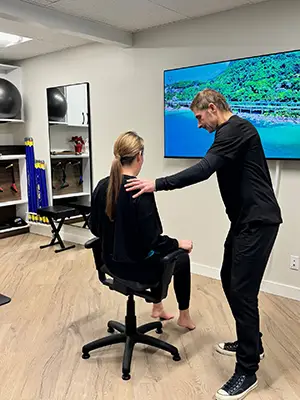
At Lakeside Spine and Wellness, a testing-first visit looks at how your spine, hips, and trunk move, then connects those findings to your lifting. We can look at where you are stiff, where you are compensating, and which movement habits may be loading your back. If chiropractic care fits, it may include gentle adjustments along with movement guidance. We cannot promise a specific outcome, and every patient responds differently. Our lower back pain page describes the approach.
Frequently asked questions
Is it safe to deadlift with a history of back pain?
For many people, strength training is part of a healthy plan, but it depends on the cause of the back pain and your current symptoms. An evaluation helps identify what movements and loads make sense for you.
Should I wear a lifting belt?
A belt can give your trunk something to brace against, but it does not replace good form or a strong core. Talk with a coach or your provider about whether it suits your goals.
How long should I rest after tweaking my back lifting?
Gentle walking and normal movement usually serve better than complete rest for ordinary strains. If pain is severe, persists beyond a week or so, or includes numbness or weakness, get evaluated.
What to do next
If your back is complaining about your training, let us look at what is behind it. New patients start with a $59 New Patient Special, including a full consultation and exam. Call (425) 276-8044 or book your first visit online with Dr. Andrew Winger at Lakeside Spine and Wellness in Renton.
References
- National Institute of Arthritis and Musculoskeletal and Skin Diseases, Back Pain
- American College of Sports Medicine, Resistance Training Guidelines